Pet First Aid Basics: Being Prepared For The Unexpected
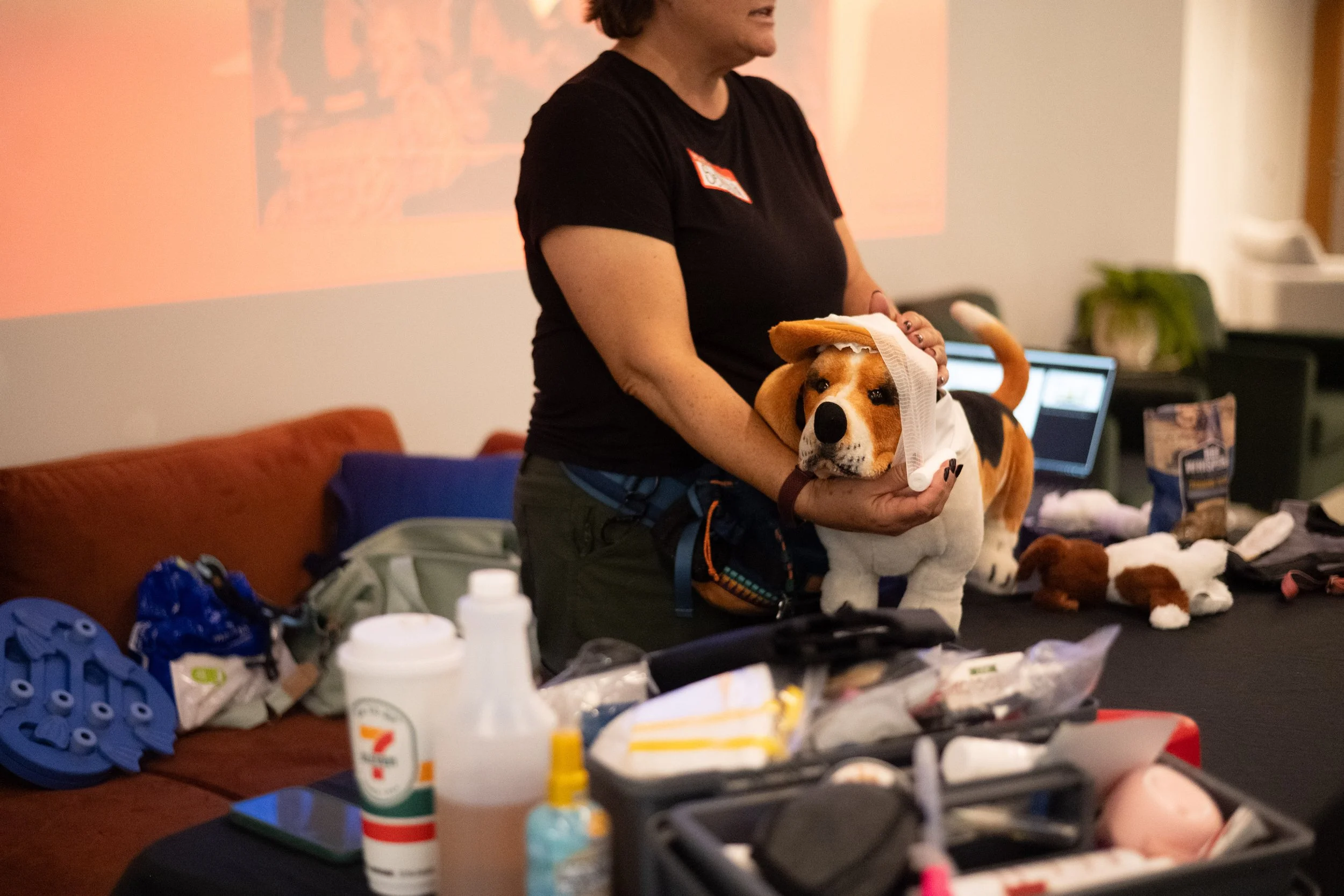
When something unexpected happens with your pet, knowing what to do in the first few moments can make a meaningful difference. While first aid is not a substitute for veterinary care, having basic knowledge and the right supplies can help you respond calmly while determining what your pet needs next.
As part of our month focused on safety, prevention, and preparedness, we are taking a closer look at some basic first-aid considerations every Pet Parent should know.
Start With a Pet First Aid Kit
Having basic supplies readily available means you do not have to search for what you need during a stressful moment.
A pet first-aid kit may include:
Gauze and non-stick bandages
Adhesive tape
Clean towels
Disposable gloves
Tweezers
Blunt-tipped scissors
Saline solution
A digital thermometer
A flashlight
Your veterinarian's contact information and your closest emergency veterinarian’s contact information
Keep your supplies somewhere that is easy to access and check them periodically to replace anything that has expired or been used.
Know When to Call Your Veterinarian
One of the most important parts of pet first aid is recognizing when a situation requires professional veterinary attention.
Contact your veterinarian or an emergency veterinary hospital promptly if your pet experiences a serious injury, difficulty breathing, uncontrolled bleeding, loss of consciousness, poisoning, seizures, severe pain, or another situation that appears life-threatening.
If you are unsure whether something is an emergency, it is better to contact a veterinary professional and ask.
Keep Important Information Accessible
In an emergency, having important information readily available can help you act quickly.
Keep your veterinarian's phone number, the location of your preferred emergency veterinary hospital, and your pet's medical information somewhere easy to find.
It is also helpful to know your pet's medications, allergies, existing medical conditions, and any other information that may be important to a veterinary professional.
If someone else regularly cares for your pet, make sure they know where this information is located as well.
Be Careful With At-Home Treatment
It can be tempting to search for a quick solution when your pet is hurt or becomes ill. However, not every first-aid technique that is appropriate for people is safe for animals.
Avoid giving your pet medications or attempting treatments unless you have been instructed to do so by a veterinary professional. If you suspect your pet has ingested something potentially harmful, contact your veterinarian or an appropriate animal poison resource rather than waiting for symptoms to appear. One resource is ASPCA Poison Control at (888) 426-4435.
First aid is about providing appropriate immediate support while getting your pet the professional care they need.
Learn Before You Need It
Reading about first aid is helpful, but hands-on education can provide another level of confidence.
Knowing how to recognize an emergency, safely assess a pet, respond to common injuries, and understand when professional veterinary care is needed are skills that are easier to practice before an emergency occurs.
That is why we encourage Pet Parents and Pet Care Professionals to consider taking a pet first-aid course.
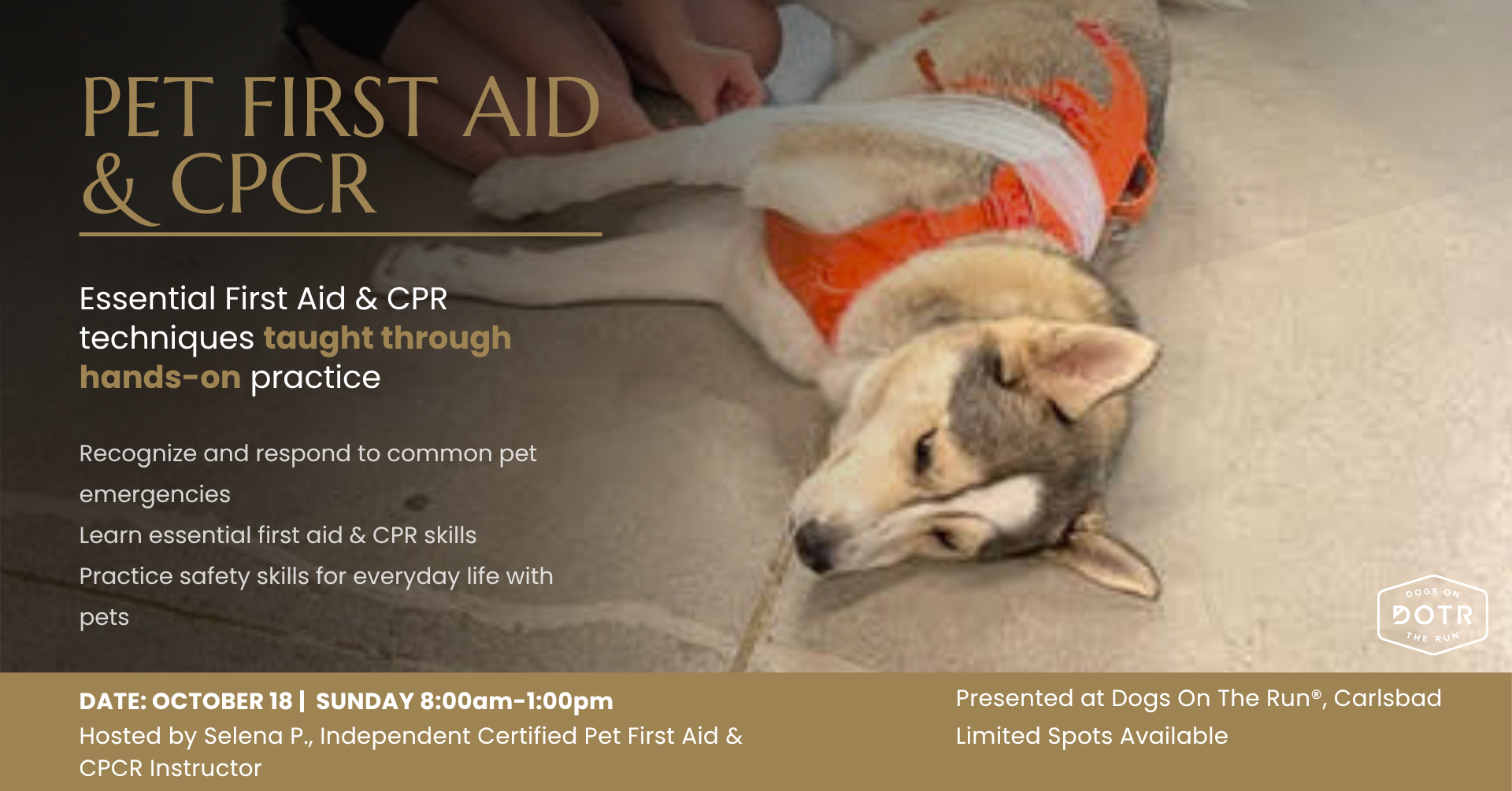
Join Us for Pet First Aid & CPCR
Dogs On The Run® is excited to offer an upcoming Pet First Aid & CPCR class with Selena P., designed to help participants build practical knowledge and confidence when responding to pet emergencies.
The class covers important first-aid and emergency-response skills, including CPCR, and provides an opportunity to learn what to do when every moment matters.
Pet First Aid & CPCR
$120 for Pet Parents who are looking to gain valuable hands-on skills in a group environment and with an experienced and certified independent trainer.
If you have ever wondered whether you would know what to do if your pet experienced an emergency, this is a great opportunity to learn before you need the information.
Preparedness Creates Confidence
No one wants to imagine their pet experiencing an emergency. But being prepared does not mean expecting something to go wrong.
It means having basic supplies available, knowing who to call, understanding when veterinary care is needed, and having the knowledge to respond calmly while help is on the way.
A few minutes of preparation today can provide valuable confidence when you need it most.